Interesting Facts About Viennoiserie and Why It Feels So Fancy
Few foods feel as effortlessly luxurious as viennoiserie. A croissant beside a tiny espresso somehow turns an ordinary breakfast into something cinematic, whether you’re sitting in a Paris café or standing in line at a minimalist bakery halfway across the world. The experience feels polished before you even take a bite.
That reaction isn’t accidental. Viennoiserie became associated with elegance through centuries of craftsmanship, expensive ingredients, café culture, and visual presentation. Behind every glossy brioche or perfectly layered pain au chocolat sits a history tied to royalty, labor-intensive technique, and modern lifestyle aesthetics that transformed pastry into a global symbol of sophistication.
What exactly is Viennoiserie?
Viennoiserie occupies a unique space between bread and pastry, combining qualities of both without fitting perfectly into either category. Unlike plain bread, these baked goods rely on enriched doughs made with butter, eggs, sugar, and milk, creating a softer texture and richer flavor. At the same time, they remain lighter and less dessert-like than cakes or fully sweet pastries.
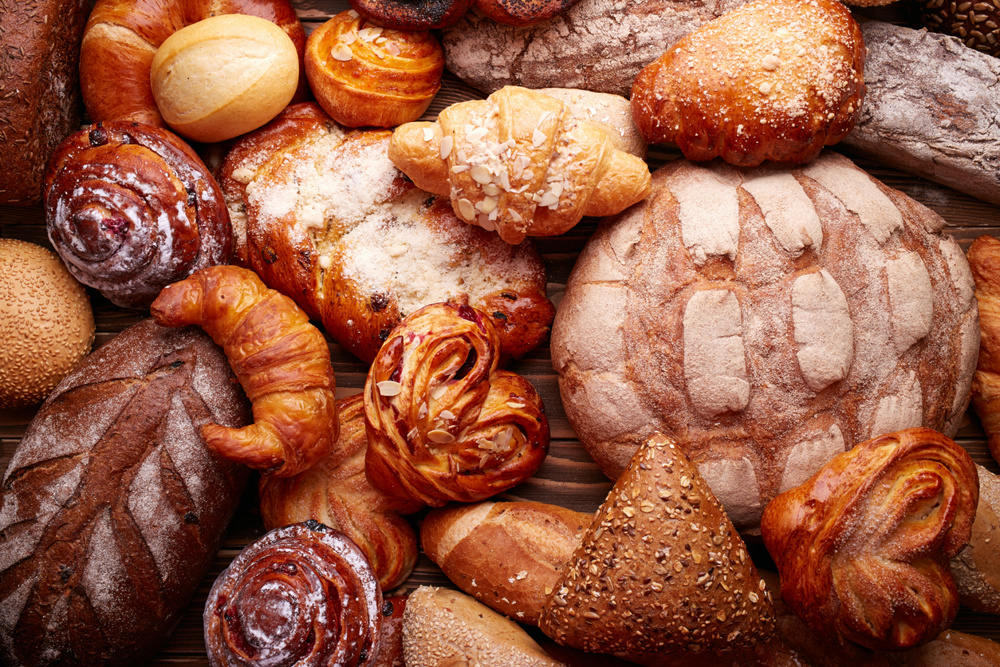
The category includes croissants, pain au chocolat, brioche, Danish pastries, and several other laminated or enriched dough products commonly associated with French bakeries. The word itself translates roughly to “things of Vienna,” referencing the Austrian roots behind many of these baking traditions.
What makes viennoiserie distinctive is balance. It carries enough richness to feel indulgent while still functioning as breakfast or café food rather than dessert. That middle ground gives these pastries much of their cultural appeal. They feel elevated without becoming inaccessible.
How Vienna's Pastry Tradition Became the Foundation of Viennoiserie
The foundations of viennoiserie trace back to Vienna’s aristocratic baking culture, where pastries operated not simply as food but as markers of wealth and refinement. During the Habsburg era, sugar and butter remained expensive ingredients accessible primarily to nobility and affluent merchants, making enriched doughs symbols of social status.
Royal confectioners helped formalize pastry-making as an elite craft. By the sixteenth century, Vienna already supported specialized pastry shops producing sweet fermented breads and crescent-shaped baked goods for upper-class customers. Baking became tied closely to café culture, social ritual, and hospitality traditions that later spread throughout Europe.
The rise of Viennese coffeehouses also transformed how pastries were consumed. Instead of functioning purely as celebratory desserts, pastries became integrated into daily social life. Coffee and pastry pairings encouraged slower dining habits centered around conversation, presentation, and atmosphere.
That relationship between pastries and café culture remains central to modern perceptions of viennoiserie today. Even now, croissants and brioches feel tied to leisurely mornings, stylish cafés, and urban sophistication in ways ordinary bread rarely does.
How the Croissant Brought Viennoiserie to Paris in 1839
While Vienna's pastry traditions had spent centuries developing behind palace walls and in Habsburg-era coffeehouses, they didn't reach Paris until an Austrian artillery officer named August Zang opened his Boulangerie Viennoise at 92 Rue de Richelieu in 1838 or 1839. His Austrian influence transformed Parisian baking immediately.
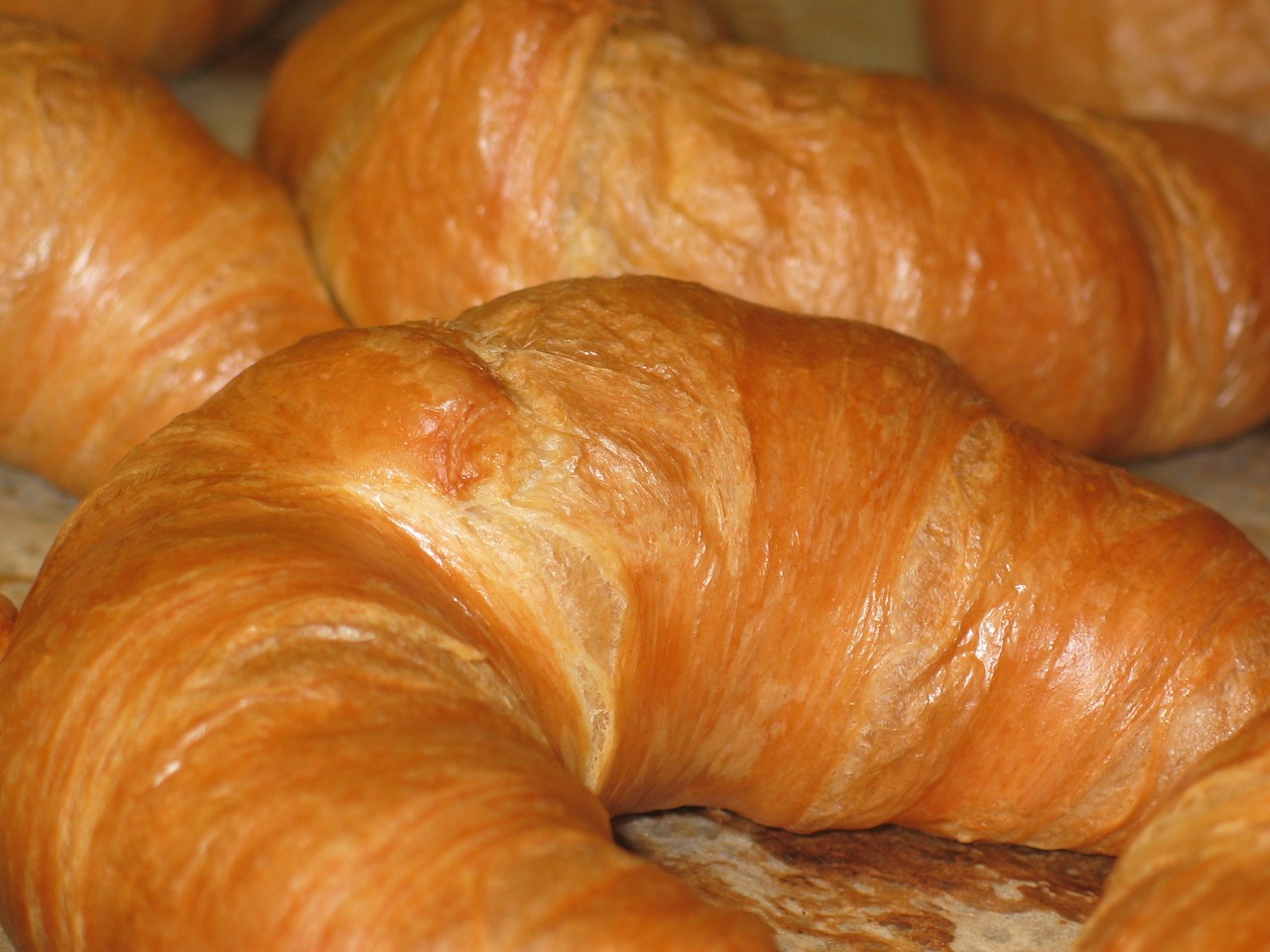
Zang's oven innovation, a patented steam oven producing glossy-surfaced baked goods, helped make his kipferl an instant sensation. Parisians renamed the crescent-shaped pastry "croissant," meaning crescent in French. Writer Saint-Beuve praised the bakery in a late 1839 letter, reflecting its rapid fame.
French bakers quickly launched competing Viennese-style shops, and by mid-century, "croissant" appeared in French dictionaries. What started as an Austrian import had permanently reshaped how Parisians thought about pastry. Much like how ARM's engineers adopted the Berkeley RISC concept to optimize for a limited set of efficient instructions, French bakers applied focused technical principles to refine Viennese dough methods into something entirely their own.
The Ancient Kipferl That Gave Viennoiserie Its Shape
Long before the croissant became internationally recognizable, the kipferl already existed throughout Central Europe as a crescent-shaped pastry tied to religious celebrations, breakfast traditions, and monastic baking. Unlike modern croissants, kipferls were denser and softer, often made with enriched bread dough closer to brioche than laminated pastry.
Their curved shape became their defining characteristic, eventually influencing the croissant’s visual identity centuries later. The crescent form itself carried symbolic power. Legends connected the shape to the Ottoman crescent moon following the Siege of Vienna, although historians debate the accuracy of those stories. Regardless of historical certainty, the mythology surrounding the pastry contributed to its mystique.
Visual symbolism matters enormously in food culture. The croissant’s elegant curved silhouette remains instantly recognizable worldwide, helping transform it into a cultural icon far beyond simple breakfast food. That aesthetic clarity contributes heavily to why viennoiserie photographs so well today. Shape, texture, and layering all create strong visual appeal before flavor even enters the equation.
The kitchen holds plenty of secrets—discover a few more today.
Why Butter, Eggs, and Sugar Make Viennoiserie So Rich
What makes viennoiserie taste so indulgent comes down to three core ingredients: butter, eggs, and sugar. Each one plays a precise role in building that unmistakable richness you can't stop thinking about. Butter aeration and egg emulsification work together through the creaming process to create something extraordinary:
- High-fat European butter traps millions of tiny air bubbles, giving you that tender, lofty crumb.
- Sugar's abrasiveness aerates butter effectively, then caramelizes into that golden, crisp exterior you crave.
- Egg emulsification binds fat and liquid into a stable, silky batter structure.
- Egg yolk lecithin deepens richness, creating the melt-in-your-mouth mouthfeel that defines true viennoiserie.
Together, they transform simple ingredients into something that genuinely feels luxurious with every single bite. Chemical leaveners expand within those trapped air bubbles but rely on the creaming process to create the bubble structure in the first place.
Why Laminated Dough Makes Viennoiserie So Irresistible
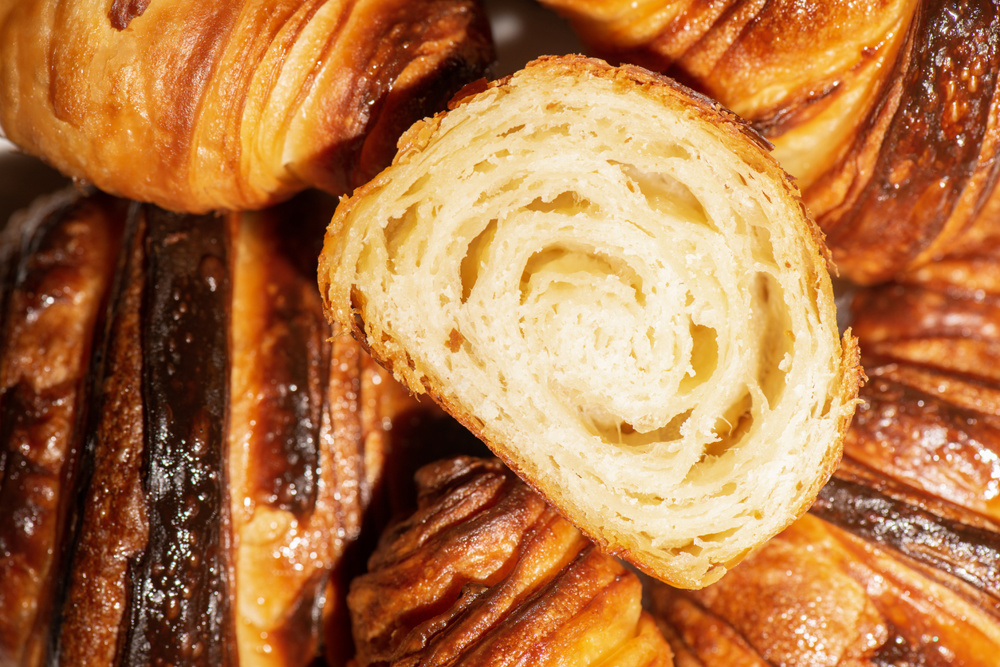
Laminated dough is the engineering secret behind viennoiserie's irresistible flakiness. During butter lamination, bakers fold butter into dough sheets repeatedly through envelope folds, creating up to 729 distinct layers. You'll find this process transforms basic dough into a precise architectural structure where microscopically thin butter and dough sheets alternate throughout.
When the laminated dough enters the oven, steam expansion takes over. Moisture converts to steam at 212°F, puffing each separated layer upward while butter maintains their individual structure. Starches then set into distinct crackly sheets coated with thin butter, producing that signature crunch you experience in every bite.
The result delivers a honeycomb-like texture that's simultaneously airy and rich. Those 729 layers aren't just structural—they're what make each croissant worth every buttery, flaky bite. To keep those butter layers intact during proofing, bakers place the sheeted dough in a proofing drawer set just below 90°F for two hours, carefully controlling both butter temperature and dough rise.
The 72-Hour Process That Makes Viennoiserie Worth the Wait
Creating world-class viennoiserie isn't a weekend project—it's a disciplined 72-hour process spanning three distinct days. Each stage builds on the last, and skipping one collapses everything. Here's what you're actually producing across those three days:
- Day 1 — You mix the détrempe and begin cold fermentation, letting complex yeast aromas develop through retarder scheduling.
- Day 2 — You laminate, relying on butter crystallization to maintain clean, continuous fat layers.
- Day 3 — You proof and bake, watching steam transform those layers into honeycomb alvéolage.
- The result — You bite into something representing 72 hours of disciplined craft.
That timeline isn't inefficiency—it's precision. Every hour exists for a reason, and your final pastry proves it. Professionals use a climate-controlled fridge to retard the dough overnight, making it possible to deliver fresh morning croissants without requiring overnight work on-site.
Pain Au Chocolat, Brioche, and the Other Viennoiseries Worth Knowing
Croissants dominate global pastry culture, but viennoiserie extends far beyond a single product. Pain au chocolat remains one of the category’s defining staples, pairing laminated dough with dark chocolate batons that melt into the pastry during baking. Brioche offers a different experience entirely. Instead of flaky layers, it emphasizes softness, richness, and buttery tenderness through heavily enriched dough.
Brioche often appears in both sweet and savory forms, demonstrating how flexible viennoiserie can become. Danish pastries introduced fruit fillings, glazes, custards, and decorative shaping techniques that further expanded the category’s visual appeal. Over time, regional adaptations appeared across Europe and eventually worldwide.
These pastries collectively helped establish bakery culture centered around display aesthetics. Rows of glossy pastries behind glass cases became visual performances designed to communicate abundance and refinement simultaneously. Presentation therefore became inseparable from viennoiserie itself. Modern bakeries still rely heavily on pastry arrangement, lighting, texture contrast, and visual abundance to reinforce perceptions of quality and luxury.
Why Viennoiserie Was Once a Symbol of Wealth
Before sugar became a pantry staple, it was a luxury reserved for royalty and wealthy merchants, making viennoiserie an edible display of social standing. Confectioner prestige grew when Matthias de Voss became Vienna's first royally appointed baker in 1566. Imperial banquets showcased these pastries as ultimate wealth displays.
Here's what made viennoiserie exclusively elite:
- Sugar remained financially inaccessible to ordinary people until the late 17th century
- Butter symbolized power, especially after 1509 when wealthy Catholics paid fees to eat it during Lent
- Enriched doughs using eggs, milk, and butter distinguished viennoiserie from basic bread
- Ordinary classes only accessed these pastries after the French Revolution
You weren't just eating pastry — you were eating privilege. Brioche, loaded with butter and eggs, became a status symbol among wealthy Parisians, reinforcing the same social distinctions that enriched dough had always represented.
Why Viennoiserie Looks, Tastes, and Costs More Than Regular Bread
When you bite into a croissant, you're tasting hours of skilled labor, premium ingredients, and a technique that regular bread simply doesn't require. Lamination demands artisan labor — folding dough and butter repeatedly, chilling between each turn, and building hundreds of thin, distinct layers. That process alone takes far longer than mixing a standard loaf.
Premium ingredients drive costs higher too. Butter croissants use high-quality butter, not margarine, while brioche loads in eggs and butter for its tender crumb. Danish pastries add sugar and cardamom for extra richness. These enriched recipes produce sweeter, more complex flavors that heartier breads can't match.
Visually, those flaky, puffed layers and glossy glazes make viennoiserie stand out immediately. That combination of craftsmanship, rich ingredients, and stunning appearance justifies every extra cent you spend. Beyond aesthetics, viennoiserie is also increasingly incorporating sophisticated presentation and technique that once belonged exclusively to high-end cakes, desserts, and chocolates.
Conclusion
Viennoiserie feels luxurious because it represents far more than pastry alone. Every croissant, brioche, or pain au chocolat carries layers of history, craftsmanship, café culture, and visual ritual that transforms simple baked goods into global lifestyle symbols. What began in Viennese royal baking traditions eventually evolved into one of the most recognizable forms in modern food culture.
Today, that identity continues growing through artisanal bakeries, social media aesthetics, and the ongoing fascination with slow, handcrafted food. Whether it’s photographed beside espresso in a minimalist café or pulled warm from a bakery oven at sunrise, viennoiserie still delivers the same promise it has for centuries: comfort elevated into something elegant.